SaaS vs Ecommerce SEO
Ecommerce: product pages ranking for specific products.
SaaS: content ranking for problems your product solves.
Different keyword strategies.
Different content types.
Keyword Research for SaaS
Problem-focused: “how to X”.
Comparison: “X vs Y”.
Alternative: “X alternatives”.
Category: “best X software”.
Long-tail high-intent keywords.
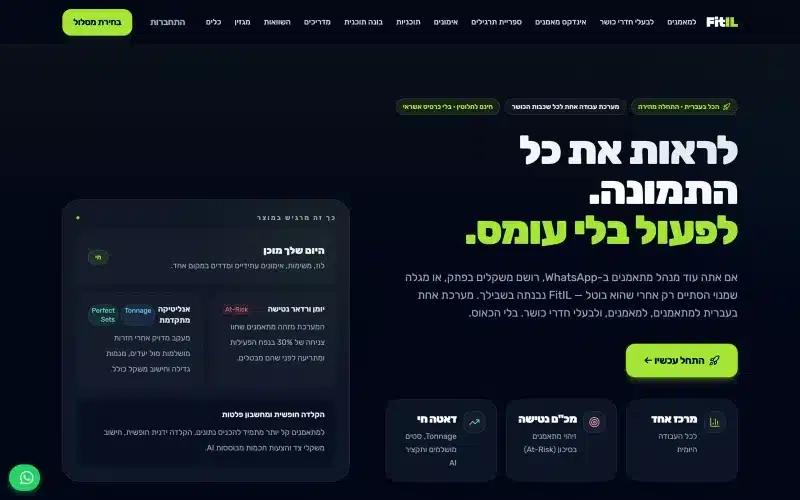 From our workA system with users, roles and billingFitIL runs trainers, trainees and gyms in one place. We built it and it is live today.Build your system →
Content Types That Rank
Comprehensive guides.
Comparison posts.
Category listicles.
Templates and tools.
Original research.
On-Page SEO
Title tag: keyword + brand.
Meta description: compelling for clicks.
H1 with primary keyword.
H2s with related keywords.
Alt text on images.
Technical SEO
Fast load times.
Mobile-first.
Structured data.
XML sitemap.
Robots.txt.
Canonical tags.
Site Architecture
Flat structure.
Related content clusters.
Internal linking.
Not deep hierarchies.
3 clicks or less to any page.
Backlink Strategy
Guest posting: relevant sites.
Original research: cited by others.
Partnerships: link exchanges (natural).
PR: press coverage links.
Digital PR campaigns.
Product-Led SEO
Free tools: attract SEO traffic.
Free templates: bookmark and share.
Programmatic content: comparison pages.
Directory pages: integrations, use cases.
Category vs Product Pages
Category (“CRM software”): high volume, competitive.
Product (“our CRM features”): brand-focused.
Comparison (“HubSpot vs Salesforce”): commercial intent.
All matter, different strategies.
International SEO
Hreflang tags.
Language-specific URLs.
Country targeting.
Different content per market.
Not automatic translation.
SaaS-Specific Ranking Factors
Comprehensive content.
Update frequency.
Author expertise.
Case studies and social proof.
User engagement signals.
Common SaaS SEO Mistakes
Only writing about product.
Ignoring intent.
Thin content on many pages.
Weak internal linking.
Neglecting technical SEO.
Measuring Success
Organic traffic.
Rankings for target keywords.
Traffic to conversion.
Backlink growth.
Domain authority increase.
Tools
Ahrefs, SEMrush: research and tracking.
Google Search Console: essential.
Screaming Frog: technical audits.
Surfer, MarketMuse: content optimization.
Long Timeline
3-6 months to see initial results.
12-18 months to strong position.
Continuous work.
Compound growth.
Not quick fix.
Israeli SEO
Hebrew content: lower competition.
English content: global market.
Bilingual site: both audiences.
Different keywords for each language.
Based on Real Projects
This guide is based on our work with:
Further Reading
If this guide helped you, you might also want to read our comprehensive guide on Custom SaaS Development.
Want to talk about your project?
A free consultation call, no commitment.
רוצים לדבר על הפרויקט שלכם?
אנחנו מתמחים בפיתוח SaaS, פתרונות AI, עיצוב UX/UI ובניית אתרים. ספרו לנו מה אתם צריכים.
דברו איתנו ←