Where Feedback Comes From
Support tickets.
In-app feedback tools.
User interviews.
Sales calls.
Reviews.
Social media.
Community forums.
Types of Feedback
Bugs: fix issues.
Feature requests: build things.
Improvements: refine existing.
Complaints: relationships.
Praise: motivation.
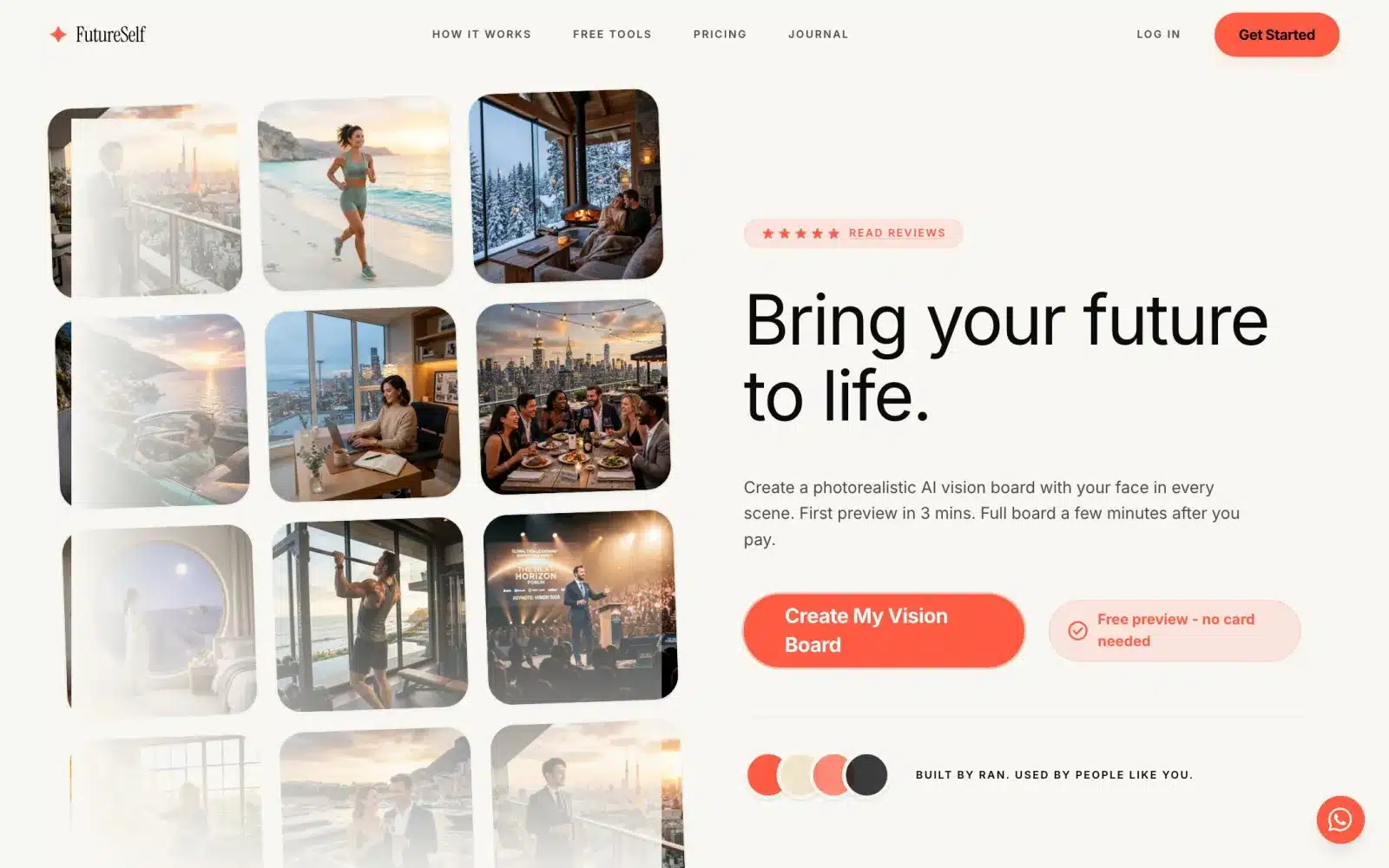 From our workA first product live in 4 weeksSign-up, payments and the core feature, ready for real users. FutureSelf is one of the products we built.How it works →
Not All Feedback Equal
Enterprise customer vs free trial.
Repeated theme vs one-off.
Aligned with strategy vs off-track.
Weight appropriately.
The Feedback Pipeline
Capture: tools and channels.
Organize: categorize and tag.
Analyze: find patterns.
Prioritize: what to act on.
Execute: build/fix.
Close loop: tell users.
Feedback Tools
Canny: feature voting.
Productboard: sophisticated.
Notion/Airtable: DIY.
Frill: simpler.
Choose based on scale.
In-App Feedback
Widget always accessible.
Contextual (which page/feature).
Screenshots auto-captured.
User info attached automatically.
Feature Voting
Public voting: transparent but political.
Private voting: safer.
Balance: qualitative feedback too.
Vote count = signal, not answer.
Prioritization from Feedback
Count: how many asked.
Weight: customer value.
Themes: underlying pattern.
Strategic fit: aligns with vision.
Effort: development cost.
Common Patterns
Onboarding confusion: fix onboarding.
Wanting adjacent product: expansion opportunity.
Wanting simpler: over-complicated.
Wanting integrations: ecosystem play.
Look for patterns.
What Not to Build
One person’s edge case (unless enterprise).
Doesn’t align with strategy.
Massive effort for marginal users.
Symptoms not root causes.
The Close-the-Loop
Tell users when their idea was built.
Named credit if appropriate.
Feels heard.
Retains customers.
When You Can’t Build
Communicate honestly.
Explain reasoning.
Suggest alternatives.
Don’t ghost feedback.
“Not now” acceptable.
Involving Users
Customer advisory boards.
Beta programs.
Feature previews.
User testing sessions.
Deep engagement with key users.
The Vocal Minority
Loud users != representative.
Silent majority matters too.
Analytics data + qualitative feedback.
Balance both signals.
Support Ticket Analysis
Categorize systematically.
Frequency reports monthly.
Patterns emerge.
Sometimes fix = feature, sometimes = doc.
Feed into product.
Sales Feedback
Deals lost: why?
Feature requests to close.
Objections raised.
Direct competitor comparisons.
Sales team is voice of prospects.
CS Feedback
Churn reasons.
Expansion blockers.
Onboarding difficulties.
Feature usage insights.
CS team is voice of retention.
Regular Reviews
Weekly: recent themes.
Monthly: patterns.
Quarterly: strategic implications.
Roadmap adjustments.
Systematic not ad-hoc.
Our Approach
All feedback centralized.
Categorized systematically.
Reviewed regularly.
Prioritized against strategy.
Users closed the loop.
Based on Real Projects
This guide is based on our work with:
Further Reading
If this guide helped you, you might also want to read our comprehensive guide on Custom SaaS Development.
Want to talk about your project?
A free consultation call, no commitment.
רוצים לדבר על הפרויקט שלכם?
אנחנו מתמחים בפיתוח SaaS, פתרונות AI, עיצוב UX/UI ובניית אתרים. ספרו לנו מה אתם צריכים.
דברו איתנו ←